
Presidential Assassination History: AI-Powered Civic History
AI-powered history of U.S. presidential assassination attempts and incidents.
What This Site Does
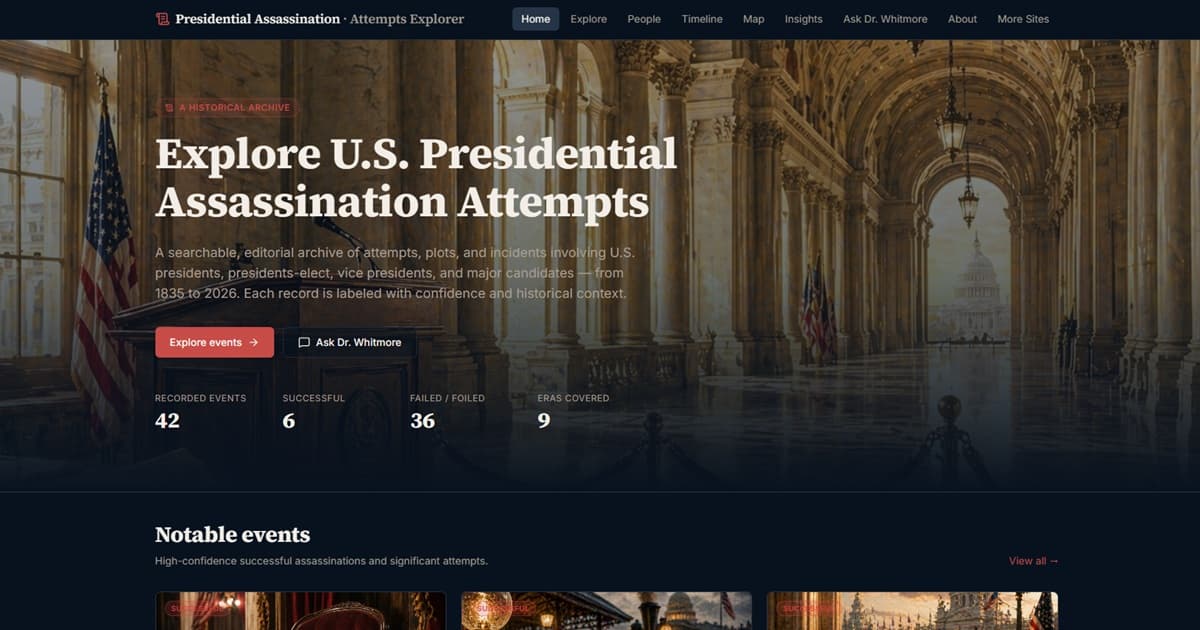
Presidential Assassination History is an AI-powered civic history project focused on U.S. presidential assassination attempts, plots, incidents, and related historical context.
For Free Speech Atlas readers, this project connects to the darker edge of political expression: the line between dissent, threat, extremism, violence, and democratic stability. A free society must protect harsh criticism of leaders, but it must also draw firm boundaries around threats and violence. This companion site helps users explore those boundaries through historical incidents involving presidents, candidates, public officials, and political conflict.
Why It Matters to Free Speech Atlas Readers
The First Amendment strongly protects political speech, including criticism of presidents and government officials. But political violence is not speech. Threats, plots, and assassination attempts represent the collapse of civic disagreement into force. Studying these incidents helps visitors understand why free societies need both open criticism and peaceful democratic norms.
How AI Is Used
The site uses AI to help visitors ask questions, explore historical timelines, understand incidents, and learn about the broader political context surrounding threats and attacks against U.S. presidents or candidates.
Best For
- Readers interested in presidential history
- Students researching U.S. political violence
- Visitors exploring the limits of political speech
- Users interested in civic history and democratic stability
Connection to Free Speech
Free speech protects dissent, criticism, protest, satire, and political anger. It does not protect violence. This site helps explain why the boundary matters — and why preserving peaceful expression is essential to avoiding political breakdown.